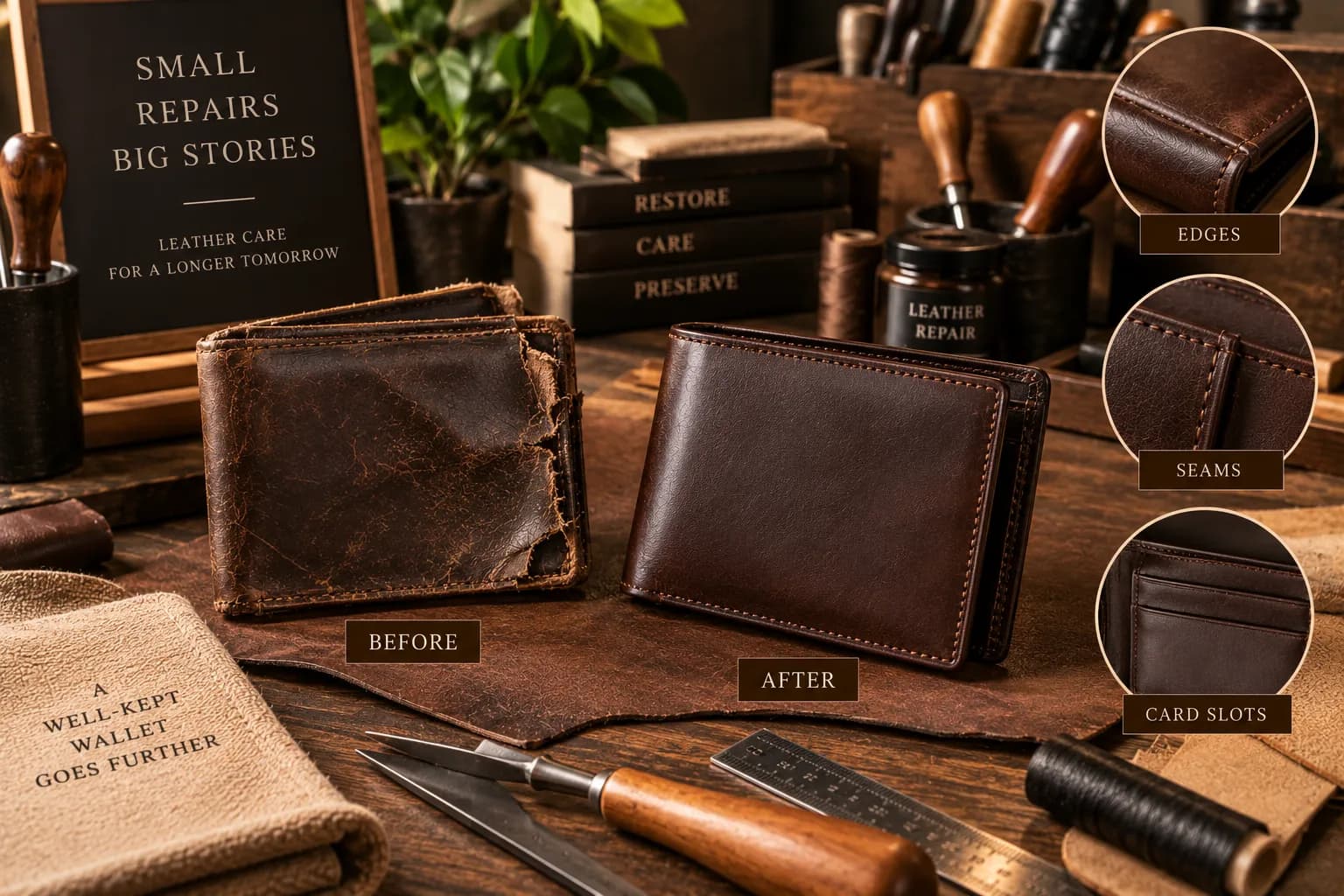
A leather wallet goes through daily wear. Constant handling, friction, stretching, and exposure to moisture can eventually affect its edges, seams, card slots, and surface finish. While a few scratches may add character, a torn edge or broken seam can affect both the appearance and usability of your wallet.
Professional leather wallet repair can address these issues while preserving the wallet's original character. At De Leather Craft, leather goods are assessed based on their material, construction, finish, and extent of damage before the appropriate restoration technique is selected.
Common Types of Leather Wallet Damage
Torn Edges
Wallet edges experience considerable friction as they move in and out of pockets and bags. Over time, the edge coating may crack, peel, or completely tear away. Professional wallet edge repair can help rebuild damaged edges, smooth uneven areas, and restore the finish for a cleaner appearance.
Loose or Broken Seams
Repeated use can loosen the stitching that holds the wallet together. In some cases, individual stitches may break, while extensive wear can cause an entire seam to open. Wallet seam repair requires careful attention to the existing construction so that the repaired section remains secure without compromising the wallet's appearance.
Damaged Card Slots
Card slots can stretch or tear because of repeated insertion and removal of cards. When the leather around a slot becomes weak, simply stitching the damaged area may not provide a lasting solution. The condition of the leather and underlying structure needs to be assessed before deciding whether the slot can be reinforced or requires more extensive restoration.
Can a Torn Leather Wallet Be Repaired?
Minor Tears
Small tears, surface damage, worn edges, and loose stitching can often be professionally restored. The treatment depends on the type of leather and the location of the damage. An experienced restoration specialist can repair the affected area while working to maintain the original texture and finish.
Major Structural Damage
A severely torn wallet may require more than stitching. If the leather has weakened significantly around a seam or card slot, the damaged section may need reinforcement or reconstruction. De Leather Craft assesses such damage before recommending the appropriate torn leather wallet repair solution.
How Professional Leather Wallet Repair Works
Assessing the Damage
The first step is to examine the wallet closely. The restoration team considers the leather type, colour, construction, stitching, edge treatment, and extent of wear. This helps determine whether the wallet requires a focused repair or broader leather wallet restoration.
Repairing Seams and Edges
Depending on the condition, damaged stitching may be repaired, while worn or torn edges can be carefully rebuilt and refinished. The objective is not simply to cover the damage but to restore the wallet's functionality while retaining its original look as closely as possible.
Restoring the Finish
Repairing the physical damage is only part of the process. A worn or faded wallet may also require colour and finish restoration. Professional restoration uses appropriate products and techniques for the particular leather rather than applying a one-size-fits-all treatment.
DIY Wallet Repair: What to Avoid
Glue, household adhesives, unsuitable dyes, and aggressive cleaning products can permanently affect leather. Applying excessive force while stitching a torn section can also enlarge the damage. This is particularly important for premium or designer wallets, where an incorrect repair may affect the original finish and overall value.
If the wallet is valuable or has extensive damage, professional assessment is a safer approach than experimenting with household repair products.
Repair vs Replacement
A damaged leather wallet does not necessarily need to be replaced. If the leather and underlying structure remain suitable for restoration, professional repair can extend its usable life. This can be particularly meaningful for premium wallets that have sentimental value or are made from high-quality materials.
How to Maintain a Repaired Leather Wallet
After restoration, avoid overfilling the wallet or forcing cards into stretched slots. Keep it away from excessive moisture and direct heat, and handle it with clean hands where possible. Regular professional cleaning and conditioning can also help prevent premature deterioration.
Choosing a Professional Wallet Repair Service
Look for a specialist who understands different leather types, finishes, stitching methods, and restoration requirements. De Leather Craft provides professional leather repair and restoration services for premium leather goods, with restoration processes selected according to the condition and material of the product.
For customers who cannot visit the facility, De Leather Craft also offers doorstep pickup and delivery services across multiple cities in India, making professional restoration more convenient.
Conclusion
A torn wallet edge, broken seam, or damaged card slot does not automatically mean your wallet has reached the end of its life. With the right assessment and restoration technique, many forms of leather damage can be repaired while preserving the wallet's appearance and functionality.
Professional leather wallet repair focuses on more than making the damage less visible. It aims to restore the craftsmanship, finish, and usability of a piece that may have been part of your everyday life for years.