Key Takeaways
- Check for thinning padding, lingering odour and fading support.
- Cushioning, rigid and semi-rigid insoles last roughly 6 to 18 months.
- Remove the factory insole first, and never stack insoles.
- Allow 2 to 6 weeks to adapt.
- Shoe insole replacement helps, but it can't fix a failed shoe.
Signs Your Shoe Insoles Need Replacement
Ever notice your feet throbbing after thirty minutes on a crowded metro platform? That's often the first hint that shoe insole replacement is overdue. Most everyday and athletic insoles last about six to twelve months, so it pays to check.
Worn Padding
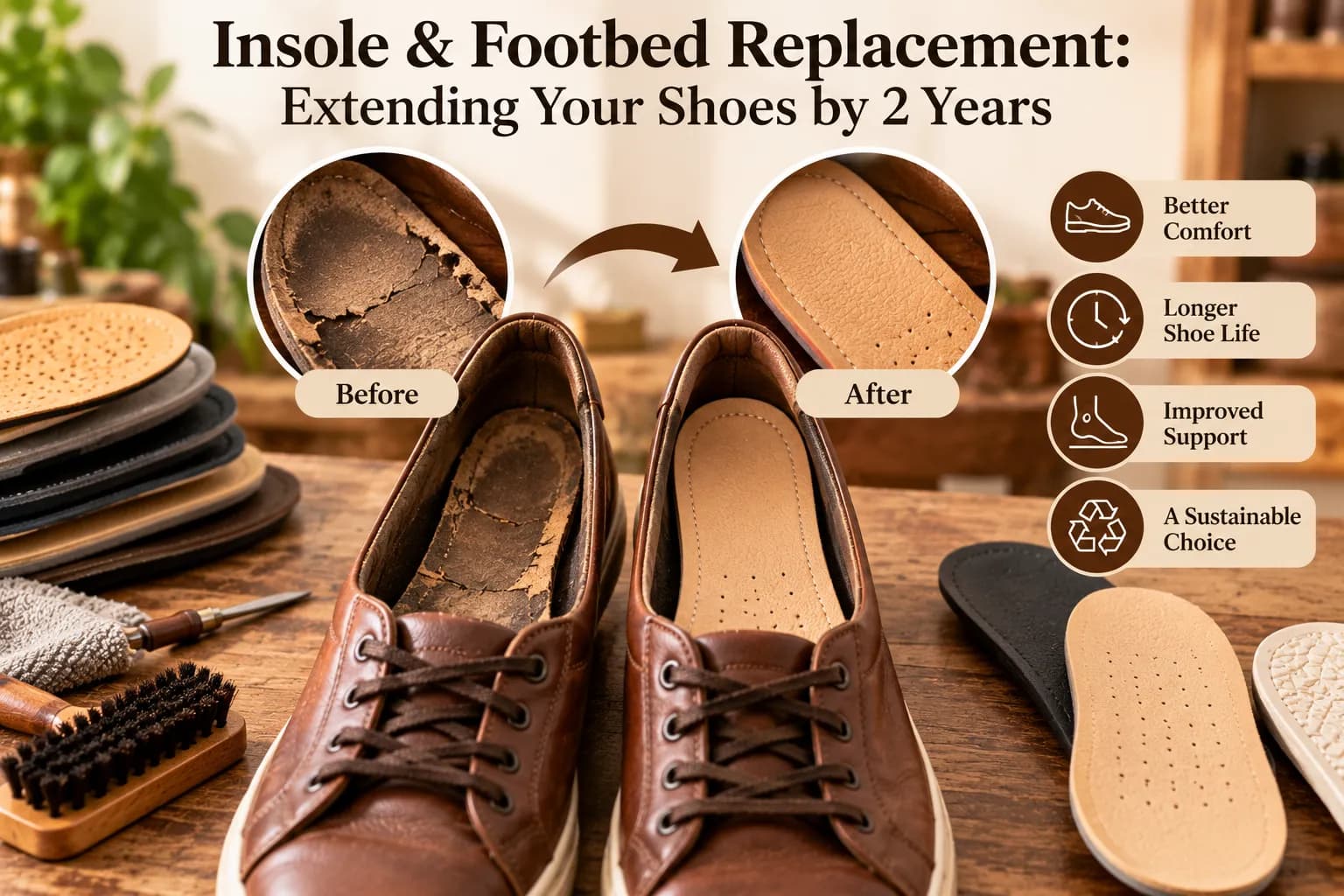
Look for visible compression or thinning, cracks, frayed edges and uneven wear patterns. Flattened, worn-insoles simply stop absorbing impact.
Odour & Sweat Build-Up
Wipe insoles with mild soap and a damp cloth, air dry them away from direct sun, and sprinkle on a little baking soda. If the smell lingers after cleaning, it's time for a new pair.
Loss of Support
Has the arch shape faded? Do foot, knee or back aches keep returning? The structure has probably given up. Shoes that suddenly feel unsupportive are another clue.
Insole vs Footbed: What's the Difference?
Honestly, the two words are often used interchangeably. Both mean the layer your foot rests on inside the shoe. What matters more is whether the factory lifts out.
If it's glued down, peel it out gently or choose a thin replacement that sits on top. Don't stack a new insole over a removable factory one, because it raises your heel and the new insole ends up rocking instead of supporting.
Benefits of Replacing Shoe Insoles
Fresh insoles restore cushioning, support and stability, easing foot pain and helping to prevent future problems. Replace insoles on time, and comfort returns, often making old favourites feel new again.
Types of Replacement Insoles
- Cushioning: Best for standing jobs and general comfort. They typically last 6 to 8 months.
- Rigid: Suits significant support needs, lasting 8 to 12 months.
- Semi-rigid: Offers arch support and moderate correction, lasting 12 to 18 months.
Not sure about your arch? Step on a paper towel with a wet foot. A full outline suggests flat feet, while only the heel and ball suggest a high arch.
Frido's guide puts basic cushioning at roughly Rs. 200 to Rs. 500 and quality prefabricated inserts at Rs. 800 to Rs. 2,000. Custom orthoses run Rs. 3,000 to Rs. 8,000 and are meant for chronic or structural problems.
Professional Insole & Footbed Replacement Process
Done right, shoe insole replacement is simple, but fit is everything. A typical process runs like this:
- The old insole comes out, and the shoe interior is cleaned and left to dry.
- The old insole becomes a template, and the new one is trimmed to match.
- We press the new insole flat, aligning the heel and toe.
- The fit is tested by walking in the shoes.
At De Leather Craft, our shoe repair and restoration team in Delhi has 40+ years of experience. We offer free doorstep pickup, so you can have your pair assessed without leaving home.
How Replacement Can Extend Shoe Life
A fresh footbed means the inside no longer drags down an otherwise good pair. Pair it with footwear restoration, such as stitching or outer sole replacement, and a well-made shoe stays in rotation far longer. That's how shoe insole replacement can extend a shoe's useful life without buying a new pair.
Give new insoles time, too. Frido suggests 2 to 6 weeks to adapt: about 2 to 3 hours daily in week one, 4 to 6 in week two, then full days.
When Should You Replace the Entire Shoe?
Insoles only fix the inside. If the upper has split or the sole has worn through, repair or a new pair may be the better call. Shoe insole replacement can't rescue a failed structure.
See a professional if severe pain lasts beyond 6 to 8 weeks, or if you notice numbness, tingling, swelling or open wounds.
Conclusion
Tired shoes don't always need retiring. Spot the signs early, choose the right insole and try shoe insole replacement before you give up on a favourite pair. Call 9560735941 or WhatsApp us to book a free doorstep pickup in Delhi. Ready to give your shoes another chapter?