Key Takeaways
- The glossy coating or film is patent leather's weak point.
- Age, moisture, poor storage, and solvents cause patent leather to peel.
- Deep scratches and solvent spots rarely come out.
- A damp cloth, a dust bag, and no oils keep bags in better shape.
- Professional recoating is the realistic fix.
What Is Patent Leather?
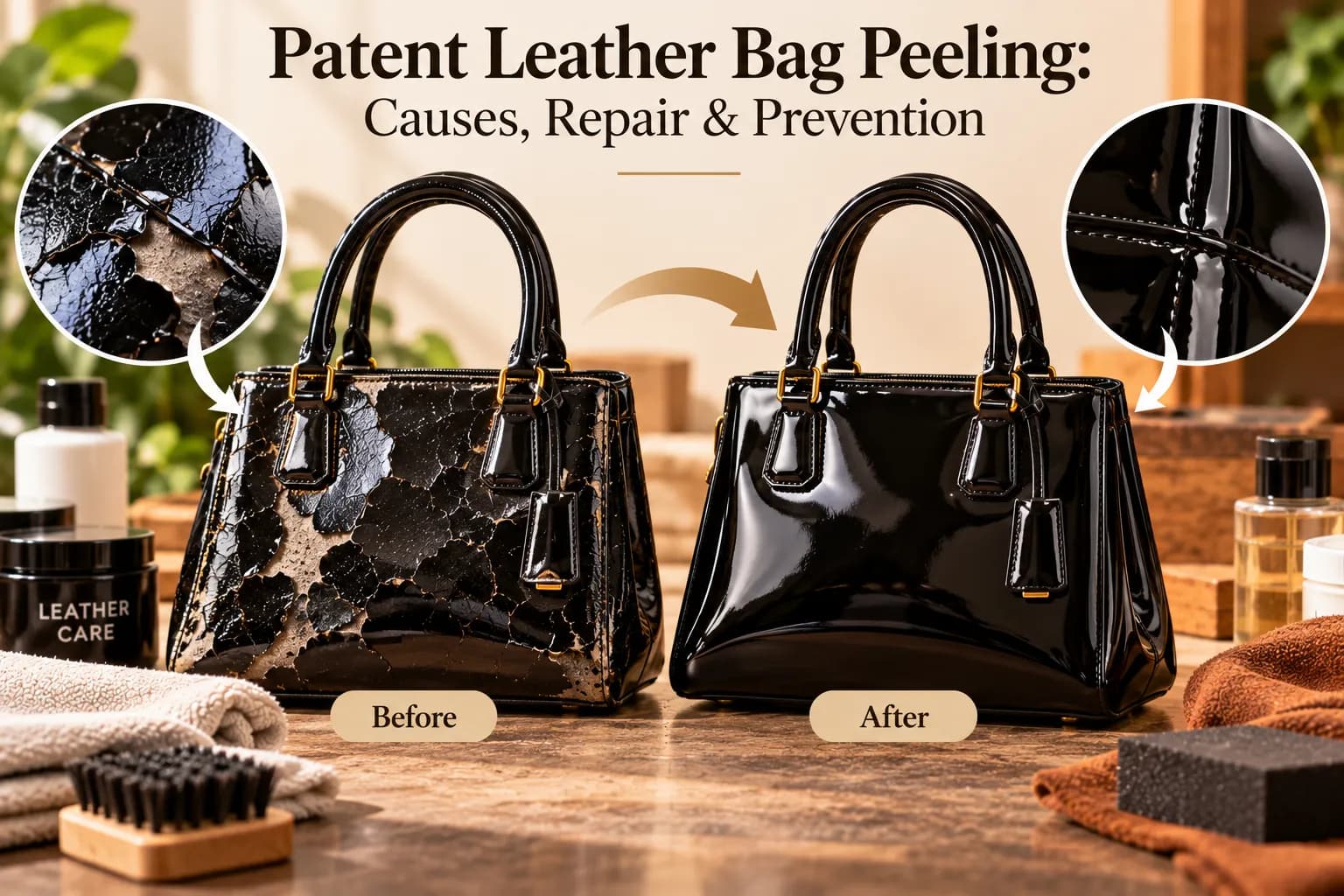
Patent leather is leather with a high-gloss finish. The shine comes from a special coating or, more commonly, a plastic film glued over the leather.
That glossy layer is both its beauty and its weak spot. When you see patent leather peeling, that top layer is losing its grip.
Why Does Patent Leather Peel?
It's rarely one culprit. Usually it's a mix of these four.
Age & Wear
Old patent leather can turn sticky as it degrades, and there's no cure. A mild leather cleaner may ease the stickiness temporarily if it isn't severe. Once the coating weakens, the leather often starts to peel.
Heat & Moisture
Extreme conditions are tough on leather. Excess moisture invites mould and mildew, extreme dryness causes cracking, and prolonged direct sunlight fades the colour. Leaving a bag in a damp cupboard will cause problems.
Poor Storage
Scratches show up instantly on glossy surfaces. Picture a cream clutch squashed beside dark jeans: light shades absorb dye, and once colour gets under the coating, it can't be cleaned. A dust bag or pillow cover helps.
Chemical Damage
This is the sneaky one. Patent leather is highly sensitive to solvents. Some cleaners, leather care products, and aerosols contain solvents that destroy the lacquer and leave spots that are rarely removable.
Peeling vs Cracking: What's the Difference?
Peeling means the coating or film lifts away from the leather beneath. Cracking is when the surface splits, often due to dryness. Minor cracks on regular leather respond to filler and conditioner, but cracked patent leather is less forgiving because of its glossy coating, so depth matters.
Can Peeling Patent Leather Be Repaired?
Honestly, it depends. Light stickiness may ease with gentle cleaning after a patch test on a hidden spot. But deep scratches can't be removed, and solvent spots rarely disappear.
Once patent leather peeling starts, the coating itself is the problem, so topical products rarely help. For a peeling leather bag, professional recoating is the realistic route.
Professional Patent Leather Restoration Process
At De Leather Craft, our team brings 40+ years of experience and USA-imported repair products to patent leather restoration and patent leather bag repair for 100+ designer brands, with free doorstep pickup across Delhi. Whether it's patent leather peeling or surface wear, a typical restoration follows four stages.
Damage Assessment
The bag is checked for peeling, cracks, scratches, discolouration, stitching and hardware. This test shows whether repair is realistic.
Surface Preparation
Dirt and oils come off gently, because harsh chemicals can damage the finish. Products are spot-tested before full use.
Repair & Recoating
Damaged areas are filled where needed. Colour is applied in several thin coats rather than one thick one, with full drying between each.
Finishing
A protective finish locks in the colour, and the piece is polished to an even shine.
How to Prevent Patent Leather Peeling
Good patent leather care is simple:
- A damp cloth is enough for regular cleaning.
- Store bags in a dust bag, away from dark-coloured items.
- Skip oils, fats, aerosols and traditional leather care products.
- Patch test anything new on a hidden area.
- Keep bags away from direct sun and damp, in a cool, dry place.
Conclusion
Patent leather is gorgeous, but it wants gentle handling. Catch patent leather peeling early, store your bag well and avoid solvents, and it'll stay glossy far longer. Already seeing flakes?
Call 9560735941 or WhatsApp us for a free doorstep pickup in Delhi. Ready to save your favourite bag?