Key Takeaways
- Check buckle and hole areas for cracks, fraying and rust.
- Condition belts regularly and store them hung, not coiled.
- Handle minor scuffs at home; book leather belt repair for edges.
- Bonded leather that keeps cracking may need to be replaced.
Signs Your Leather Belt Needs Repair
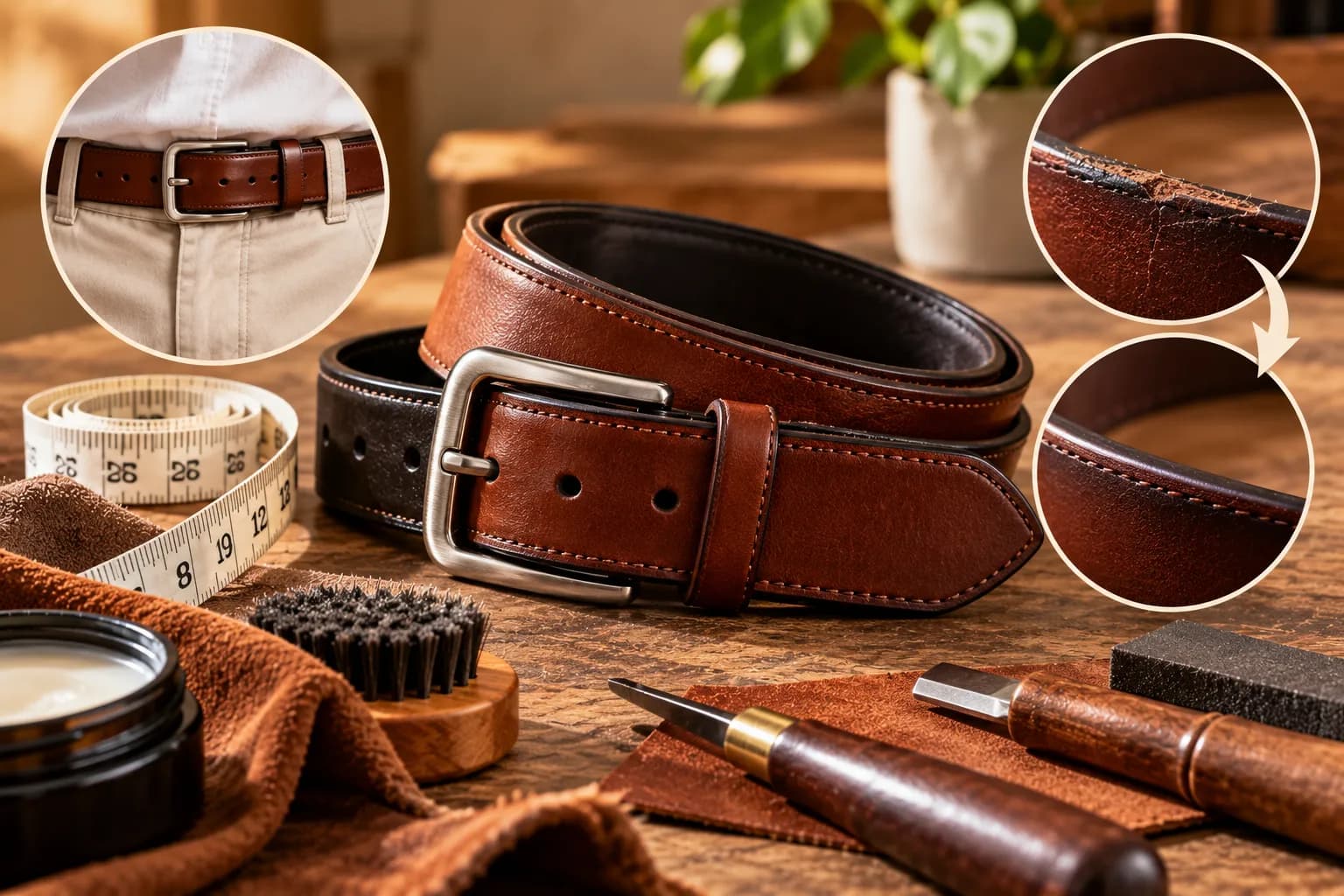
Check stress points near the buckle and holes. Warning signs include a dry, hard texture; surface cracks; fading near holes or edges; warping; mould; and rusty hardware. Catching them early can prevent costlier leather belt repair later.
How Leather Belt Sizing Works
Good leather belt sizing is about fit. Because the holes and buckle area are stress points, leave changes here to a specialist who can assess the leather first.
Adding or Moving Holes
Holes sit at stress points, so don't rush new ones.
Shortening a Leather Belt
Shortening is best judged on the belt itself, since leather, edges and hardware all matter.
Common Leather Belt Edge Damage
Loose or frayed edges at the buckle or strap weaken construction and need prompt attention. Heat, sun, and skipped conditioning can damage a leather belt sooner.
How Belt Edges Are Repaired
This is where I'd skip the DIY. Edges are structural, so belt edge repair and any wider leather belt repair are best handled by someone who can inspect the whole strap. Home fixes are only for minor scuffs.
Other Common Belt Repairs
Stitching
Loose or frayed areas at the buckle or strap compromise construction, so don't delay leather belt repair.
Buckle & Hardware
Rust or tarnish can damage the surrounding leather, so address hardware early.
Professional Leather Belt Restoration Process
A sensible belt restoration starts with inspecting the leather, edges, stitching and hardware. If you're in Delhi, DE Leather Craft is a good place to repair a worn favourite.
How to Maintain a Leather Belt
Good leather belt maintenance is simple. Wipe with a damp, soft cloth and mild soap in gentle circles, air-dry it flat in the shade, then condition and buff. Hang belts on a rack; never coil them tightly. Rotate belts so each one rests.
When to Repair vs Replace a Belt
Wondering if leather belt repair is worth it? Repair suits dryness, minor scuffs and early edge or hardware trouble. Cracking in cheap bonded leather, made from glued scraps, is a different story, so replacing it may be wiser.
Conclusion
A quality belt rewards a little attention. Act on early warning signs. When damage goes beyond a quick fix, professional leather belt repair keeps your favourite in rotation.