Leather furniture can bring a refined, timeless look to a home, but even high-quality leather needs the right care to stay supple and attractive. Over time, everyday use, dust, heat, sunlight, friction, and unsuitable cleaning products can cause the surface to lose moisture and flexibility. Once leather becomes excessively dry, small lines may develop into visible cracks.
Learning how to prevent leather furniture from cracking is therefore less about treating the problem after it appears and more about maintaining the leather before damage becomes difficult to reverse. With regular cleaning, suitable conditioning, protection from environmental factors, and professional restoration when needed, leather furniture can retain its character for years.
At De Leather Craft, leather furniture care goes beyond basic cleaning. Our specialists work with different leather types and finishes and use professional assessment and restoration techniques to determine what a piece needs. From cleaning and conditioning to colour restoration and cracked leather repair, the focus is on preserving the appearance, feel, and usability of your furniture.
Why Does Leather Furniture Crack?
If you are wondering why leather furniture cracks, the answer usually involves a combination of ageing, moisture loss, environmental exposure, and regular wear.
Leather is a natural material. Although it is durable, its surface can gradually lose flexibility when it is not maintained properly. As the leather dries, it becomes less capable of moving with the repeated pressure and stretching caused by everyday use. Eventually, the surface may develop fine lines, peeling, or cracks.
Some of the common causes of cracked leather include:
- Prolonged exposure to direct sunlight
- Excessive heat from heaters or other heat sources
- Dry indoor environments
- Infrequent cleaning and conditioning
- Harsh household cleaning products
- Excessive friction from regular use
- Spills that are not cleaned correctly
- Incorrect cleaning or conditioning methods
- Natural ageing of the leather
- Using products that are not suitable for the leather finish
How to Prevent Leather Furniture from Cracking
The best approach to leather care is preventive. Instead of waiting until cracks become noticeable, create a routine that addresses the factors that can dry, weaken, or discolour the surface.
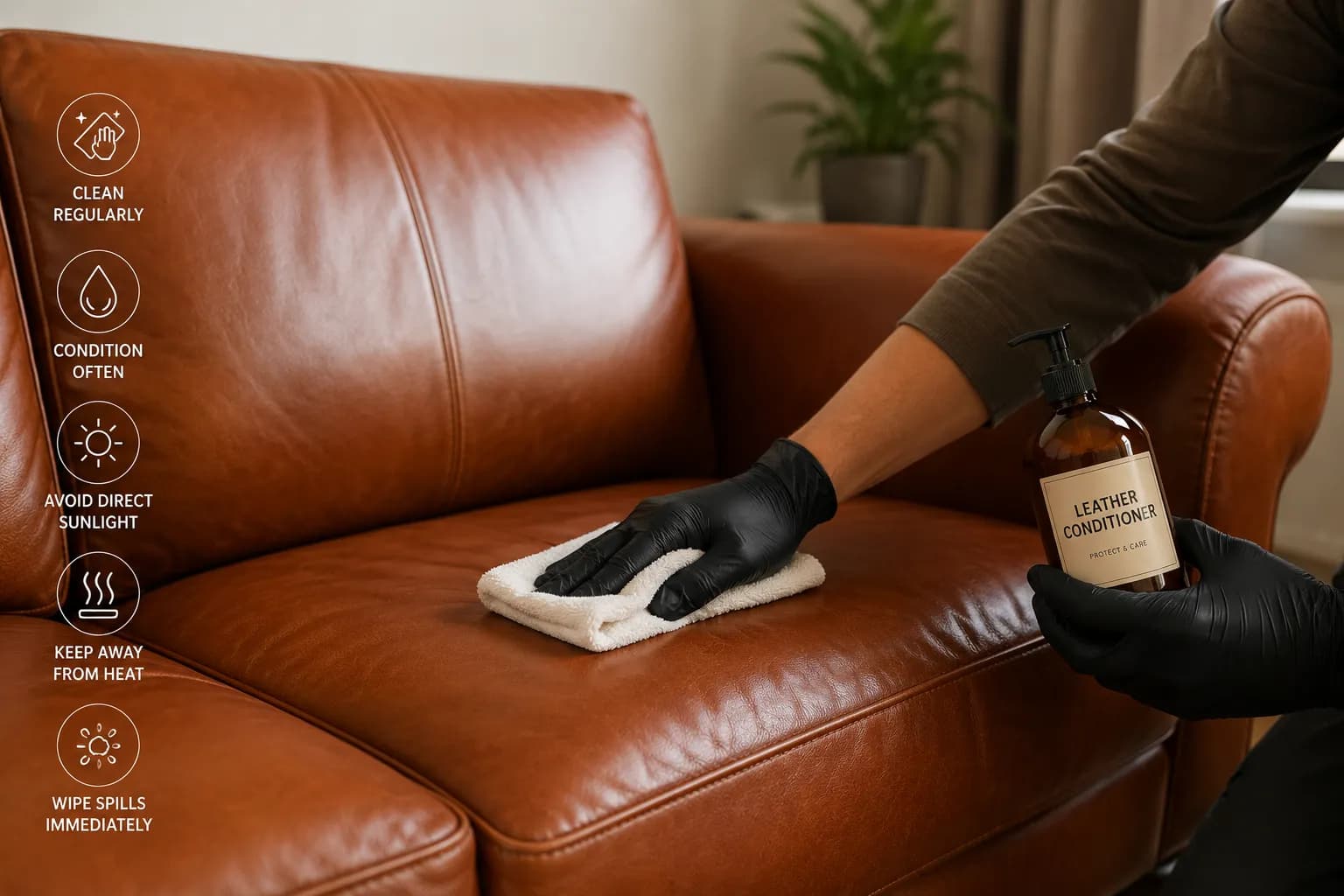
1. Clean Leather Regularly
Dust, body oils, food particles, and everyday contaminants can build up on leather furniture, especially around seats, armrests, and headrests. Use a soft cloth and a leather-safe cleaner suited to the material. Regular cleaning helps preserve the finish and allows you to identify early signs of dryness, discolouration, scuffing, or damage.
2. Use a Suitable Leather Conditioner
One of the most useful leather couch maintenance tips is using a suitable leather conditioner for furniture. Conditioning can help maintain suppleness and minimise excessive dryness. However, different leather types and finishes require different products, which is why material knowledge is important before choosing a care method. At De Leather Craft, our specialists assess the leather before recommending appropriate conditioning or restoration treatments for furniture.
3. Maintain Leather Hydration
Proper leather hydration helps maintain flexibility and reduce the effects of dryness. However, applying excessive oil or conditioner does not necessarily improve leather health. The right product and quantity depend on the leather type and finish. Professional assessment can determine whether your furniture requires conditioning, cleaning, repair, or restoration.
4. Keep Furniture Away from Direct Sunlight
Direct sunlight can gradually fade and dry leather, potentially contributing to surface deterioration. Keep leather furniture away from strong sunlight where possible, or use curtains and blinds to reduce exposure. If fading or cracking has already occurred, simply changing the furniture's position may not reverse the damage. Professional restoration may help.
5. Keep Leather Away from Excessive Heat
Excessive heat can accelerate moisture loss and contribute to leather becoming dry and less flexible. Avoid positioning leather furniture directly beside heaters, fireplaces, radiators, or other heat sources. Although damage may not appear immediately, prolonged exposure can affect the surface over time. Maintaining stable indoor conditions supports long-term leather care.
6. Avoid DIY Oils and Household Products
Household oils and cleaning products are not suitable for every leather finish. For example, is coconut oil safe for leather furniture? It is not recommended as a universal conditioner because it may alter the surface or texture. Avoid cooking oils, strong detergents, and unsuitable cleaners. Choose products specifically designed for your leather type.
How Often Should You Condition Leather Furniture?
A common question among leather furniture owners is: how often should you condition leather furniture? There is no single frequency that works for every sofa or chair. The appropriate conditioning schedule depends on factors such as:
- Type and finish of leather
- Age of the furniture
- Frequency of use
- Indoor temperature and humidity
- Exposure to sunlight
- Existing dryness
- Previous cleaning and restoration treatments
For some furniture, periodic conditioning may be sufficient. Pieces that experience heavy daily use or are exposed to dry conditions may require closer monitoring.
What to Do When Leather Furniture Has Already Cracked
Preventive care is ideal, but leather furniture can still develop damage despite regular maintenance. Once cracks appear, avoid aggressively rubbing the area or applying multiple home remedies.
Minor surface deterioration may sometimes be addressed through professional cleaning, conditioning, or leather colour restoration. Deeper cracks, peeling, damaged finishes, and significant discolouration may require a more extensive restoration process.
At De Leather Craft, our specialists examine the footwear before recommending a leather shoe resole. Depending on the shoe, the restoration may involve outsole replacement, heel work, stitching repairs, colour restoration, or other leather treatments.
The objective is not simply to cover the damaged area. Proper restoration considers the leather's existing finish, colour, texture, and overall condition so that the repaired area integrates naturally with the rest of the furniture.
Why Professional Leather Restoration Matters
Leather furniture can be a significant investment, and using an unsuitable cleaning product or attempting an aggressive DIY repair can sometimes make the original damage more difficult to restore. Professional leather restoration begins with understanding the material. The process is selected according to the condition and type of leather rather than following a generic treatment. That is also why choosing the right leather care shop matters when you want safe, material-specific results.
Professional care can be especially useful when you notice:
- Deep cracks
- Peeling or flaking
- Severe dryness
- Fading or uneven colour
- Stains that do not respond to normal cleaning
- Scratches and scuff marks
- Damaged upholstery
- Worn-out areas caused by repeated use
Addressing these problems early can help prevent further deterioration and may restore the furniture's appearance more effectively.
Leather Furniture Maintenance: What to Avoid
Knowing what not to do is just as important as knowing what to do. Avoid placing leather furniture in direct sunlight for extended periods. Do not use household detergents, abrasive sponges, or unverified oils without checking their compatibility with the leather.
It is also important not to over-condition the furniture. Excessive use of creams or conditioners can affect the surface and may attract dirt.
If you are unsure about the type of leather or the condition of your furniture, professional assessment is a safer option. This is particularly relevant for older, premium, or extensively damaged furniture where an incorrect treatment could affect the original finish.
FAQs
How do you stop leather furniture from cracking?
To reduce the risk of cracking, clean leather regularly with suitable products, maintain appropriate conditioning, limit direct sunlight and excessive heat, and address early signs of dryness. Avoid household cleaners and unverified oils. If cracks have already developed, professional assessment can determine whether cleaning, conditioning, colour restoration, or repair is required.
Why is my leather couch cracking?
A leather couch may crack because the surface has become dry and less flexible over time. Sunlight, heat, friction, ageing, unsuitable cleaning products, and insufficient maintenance are common contributing factors. The leather type and finish can also influence how it responds to environmental conditions and everyday use.
What causes leather furniture to dry out?
Leather furniture can dry out due to prolonged sunlight, excessive heat, low humidity, frequent friction, ageing, and unsuitable cleaning products. Inadequate maintenance may also contribute to moisture loss. Regular cleaning and appropriate conditioning can help maintain the leather, while professional treatment may be required when the surface has already become severely dry.
How often should leather furniture be conditioned?
There is no universal conditioning schedule because leather types, finishes, usage levels, and indoor conditions differ. Periodic conditioning may be appropriate for many pieces, but the furniture should be assessed before applying a product. Over-conditioning can also affect the surface, so use a product designed for the specific leather.
Can sunlight crack leather furniture?
Yes. Prolonged direct sunlight can contribute to fading, drying, and deterioration of leather. Over time, repeated exposure can make the surface less flexible and more vulnerable to cracking. Keep leather furniture away from strong direct sunlight where possible and use curtains or blinds to reduce exposure.
Is coconut oil safe for leather furniture?
Coconut oil should not be considered a universal leather conditioner. It can alter the appearance or feel of certain leather finishes and may not provide the appropriate type of care. For valuable furniture, it is better to use a leather-care product suited to the specific material or consult a professional leather restoration specialist.