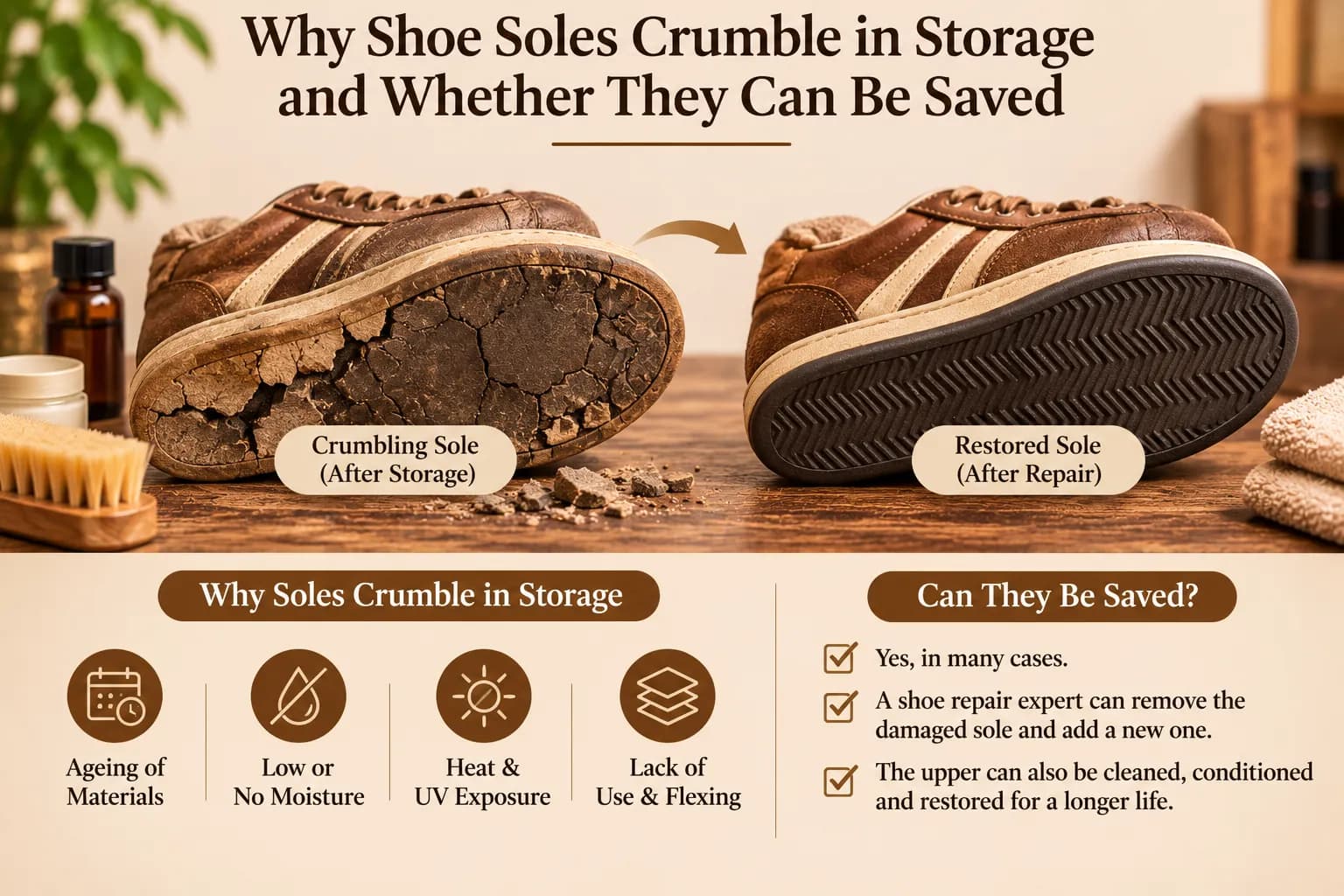
A pair of quality shoes can look perfectly fine when stored away, only to develop cracked, brittle or crumbling soles when taken out months later. This is particularly common with shoes that have polyurethane (PU) soles, which can deteriorate even without regular use. The problem is often linked to moisture, temperature fluctuations and the natural ageing of sole materials.
Understanding why shoe sole crumbling happens can help you protect your footwear and recognise when professional restoration is needed. At De Leather Craft, we offer specialised shoe repair and restoration services to help revive damaged footwear, including professional sole replacement when the original sole cannot be saved.
Why Do Shoe Soles Crumble in Storage?
Shoe soles are made from different materials, including rubber, polyurethane (PU), thermoplastic polyurethane (TPU) and leather. Each material reacts differently to environmental conditions and ageing.
Polyurethane soles are particularly vulnerable to deterioration over time. Even when shoes remain unused, chemical changes within the material can make it lose flexibility and structural strength. Humid storage conditions, poor ventilation and exposure to heat can accelerate this process.
This explains why shoes deteriorating in storage is not necessarily a sign of poor manufacturing or excessive wear. Sometimes, leaving shoes untouched for extended periods can contribute to the problem.
What Is Sole Hydrolysis and How Does It Affect Shoes?
Sole hydrolysis is a chemical reaction in which moisture breaks down the polyurethane material used in shoe soles. It gradually damages the polymer structure, causing the sole to become weak, brittle and eventually crumble.
Unlike surface dirt or scratches, hydrolysis affects the internal composition of the sole. It can happen even when shoes are kept inside cupboards or their original boxes.
Once hydrolysis progresses, the sole may start separating from the upper or break apart into small pieces. Cleaning or conditioning cannot reverse this chemical deterioration.
Signs That Your Shoe Soles Are Deteriorating
Recognising early signs of crumbling soles can help you decide whether your footwear needs professional attention.
Look out for these warning signs:
- Small cracks: Fine lines or splits appearing across the sole surface.
- Powdery residue: The sole releases dust or small particles when touched.
- Brittle texture: The material feels hard, dry or less flexible than before.
- Sole separation: The sole begins detaching from the shoe upper.
- Uneven breaking: Small sections of the heel or outsole start breaking away during movement.
If you notice these symptoms, avoid wearing the shoes until their condition has been assessed.
Can Crumbling Shoe Soles Be Repaired?
Whether a shoe can be restored depends on how much damage has occurred. Minor sole separation or localised damage may be addressed through professional shoe sole repair, depending on the material and construction.
However, when hydrolysis has weakened the entire polyurethane sole, applying adhesive or patching the damaged areas will not restore its structural integrity.
At De Leather Craft, our specialists assess the sole material, extent of deterioration and overall shoe construction before recommending a suitable restoration approach. If the original sole cannot be salvaged, replacement may be the more reliable option.
Therefore, finding the right crumbling shoe soles fix requires identifying the underlying cause rather than simply covering visible damage.
How to Prevent Shoe Soles from Crumbling During Storage
Following a few practical shoe storage tips can help slow material deterioration and protect your footwear.
- Choose a cool, dry location: Avoid storing shoes in damp cupboards, basements or areas exposed to direct sunlight.
- Ensure ventilation: Do not keep shoes sealed in airtight plastic bags for extended periods.
- Clean before storage: Remove dirt, dust and moisture before putting footwear away.
- Use shoe trees: Wooden shoe trees can help maintain the shape of leather footwear.
- Avoid prolonged storage: Take shoes out periodically, inspect them and allow them to air naturally.
- Control humidity: Use suitable moisture absorbers in storage spaces, without placing them directly against the shoes.
Remember that storage practices can reduce environmental damage but cannot completely prevent the natural ageing of polyurethane.
When to Choose Professional Shoe Sole Replacement
If the sole has become brittle, breaks apart when touched or shows extensive hydrolysis, professional sole replacement is generally preferable to repeated repairs.
De Leather Craft provides specialised shoe restoration services, including assessment and sole replacement based on the shoe's material, design and construction. Our craftsmen focus on restoring footwear while maintaining its original appearance and comfort wherever possible.
Professional assessment is particularly important for designer footwear, where sole construction, finishing and material compatibility need careful attention. Rather than discarding an otherwise valuable pair, consider having it evaluated by experienced restoration specialists.
Conclusion
Shoe sole crumbling can happen even when footwear is rarely worn. Moisture, ageing and hydrolysis can gradually weaken certain sole materials, making storage conditions and periodic inspection important. While minor damage may be repairable, extensively deteriorated polyurethane soles usually require replacement.
If your favourite shoes have started crumbling after months in storage, De Leather Craft can assess their condition and recommend an appropriate restoration solution to help extend their life.