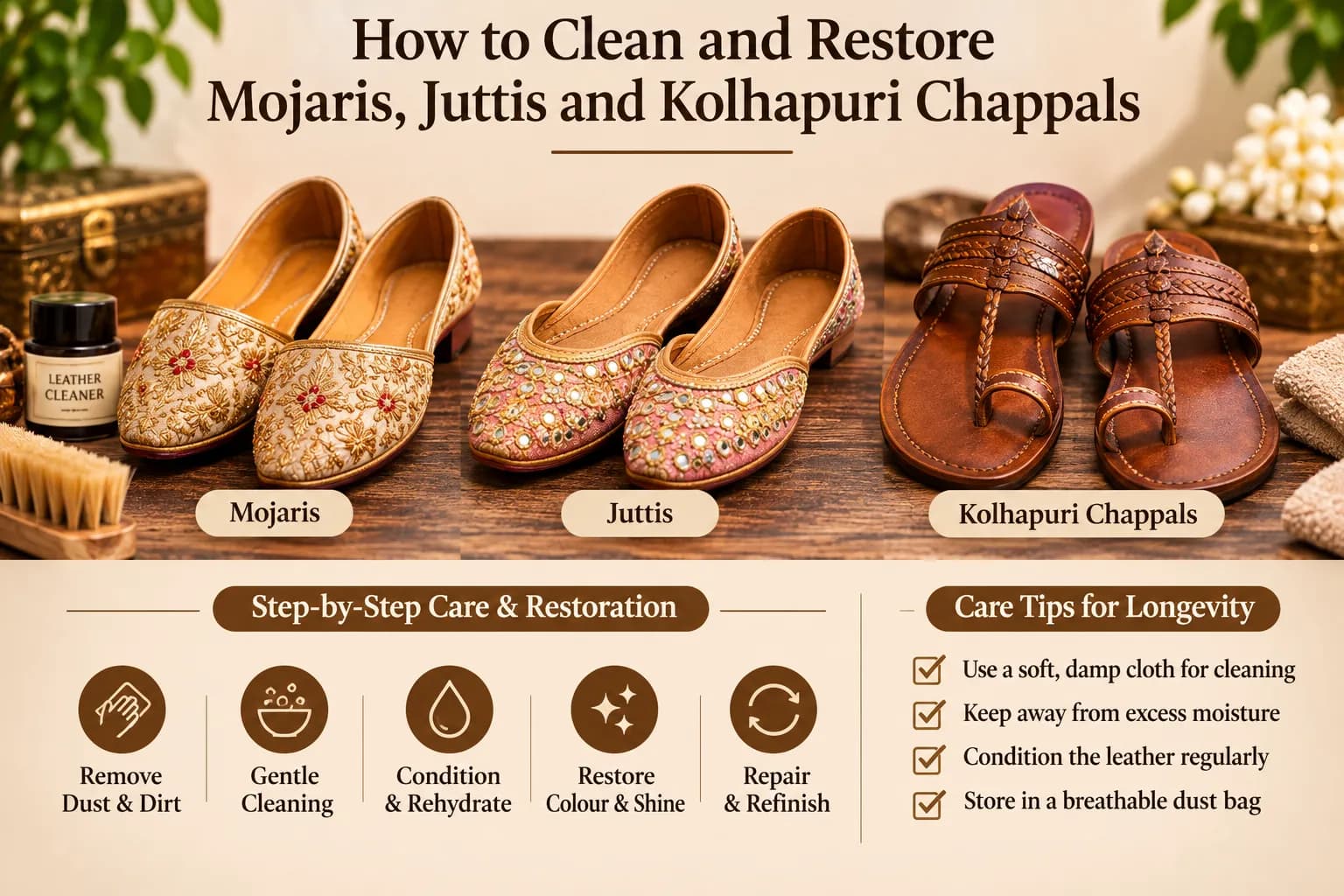
Mojaris, juttis and Kolhapuri chappals are more than traditional footwear. They reflect India's rich craftsmanship, intricate embroidery and distinctive leatherwork. Whether paired with ethnic outfits or contemporary clothing, these footwear styles often hold both financial and sentimental value. However, regular use, dust, moisture and improper storage can affect their appearance and durability.
Knowing how to clean mojaris and maintain leather footwear can help preserve their finish and craftsmanship. For premium or heavily embellished footwear, professional care from specialists like De Leather Craft can also help restore worn-out pieces without compromising their original character.
Why Traditional Indian Footwear Needs Special Care
Traditional Indian footwear often features genuine leather, suede, hand embroidery, beads, metallic embellishments and decorative stitching. These materials require different cleaning methods. Excessive water, harsh detergents and aggressive scrubbing can cause colour bleeding, stiffening, stains or damage to delicate detailing.
Leather Kolhapuri chappals may also develop dryness, cracks and sole wear with regular use. Similarly, embroidered mojaris and juttis can lose their finish when exposed to friction and moisture. Following proper Kolhapuri chappal care practices helps maintain their appearance and extends their usable life.
How to Clean Mojaris, Juttis and Kolhapuri Chappals
The right cleaning method depends on the material and construction of the footwear. Here are some basic maintenance practices:
- Leather mojaris and juttis: Use a soft, dry cloth or brush to remove loose dust. Avoid soaking them or applying household cleaning products.
- Embroidered footwear: Gently remove surface dirt using a soft-bristled brush. Avoid rubbing beads, zari work or decorative threads.
- Kolhapuri chappals: Wipe the leather straps and upper surface with a slightly damp, well-wrung cloth if the material permits. Dry naturally away from direct sunlight.
- Suede footwear: Use a suede-specific brush to lift surface dirt. Avoid water-based cleaning unless recommended for the material.
Effective Indian ethnic footwear cleaning starts with identifying the material before selecting a cleaning product. This prevents accidental damage to delicate finishes.
How to Remove Stains and Odours from Traditional Footwear
Dust, sweat and accidental spills can leave stains and unpleasant odours on traditional footwear. Start by removing loose dirt with a dry cloth. For minor surface marks, use a material-appropriate cleaner after testing it on a concealed area.
Avoid applying perfume, alcohol-based sprays or strong detergents directly to leather. These products can affect the colour and finish. Allow footwear to air out in a shaded, ventilated space to reduce moisture-related odours.
For stubborn stains, especially on embroidered or coloured mojaris, professional cleaning is preferable to repeated home treatments.
How to Restore Worn-Out Mojaris and Kolhapuri Chappals
Regular use can cause leather to lose its colour, develop cracks or become uneven. Decorative stitching may loosen, while soles and straps can show signs of wear.
Professional restoration can address several issues, including:
- Colour fading and surface discolouration.
- Dry or damaged leather.
- Loose stitching and minor structural damage.
- Worn-out soles and damaged straps.
- Loss of the original finish and appearance.
De Leather Craft offers specialised leather restoration and repair services using material-appropriate treatments and colour-matching techniques. Its restoration expertise helps revive worn leather footwear while preserving its original character.
How to Store Traditional Indian Footwear Safely
Proper storage is essential for maintaining traditional footwear between uses.
- Clean footwear before putting it away.
- Allow it to dry completely after use.
- Store each pair in a breathable dust bag.
- Keep footwear away from direct sunlight and damp areas.
- Avoid stacking heavy items over embroidered mojaris or juttis.
- Use shoe inserts to help maintain the original shape.
These simple practices can reduce dust accumulation, moisture damage and unnecessary creasing.
When to Choose Professional Footwear Restoration
Home cleaning is suitable for routine maintenance, but it may not be enough for footwear with deep stains, cracked leather, peeling finishes or damaged stitching. Repeated DIY treatments can worsen the damage, particularly when the footwear features delicate embroidery or multiple materials.
De Leather Craft provides professional footwear restoration, including leather cleaning, colour restoration and repair. Its specialists assess the material and condition before selecting suitable restoration methods. This approach is particularly useful for expensive or sentimental footwear that deserves more than routine cleaning.
If your favourite juttis, mojaris or Kolhapuri chappals have lost their original finish, professional restoration can help bring them back into use. Rather than replacing a well-loved pair, consider expert care to preserve its craftsmanship.
Conclusion
Traditional footwear requires consistent maintenance and material-specific cleaning to retain its appearance and durability. Understanding how to clean kolhapuri chappal styles, caring for embroidered juttis and storing leather mojaris correctly can prevent avoidable damage. For deeper stains, worn-out soles, colour fading or damaged leather, De Leather Craft offers professional restoration solutions to help preserve your favourite footwear and extend its life.