Key Takeaways
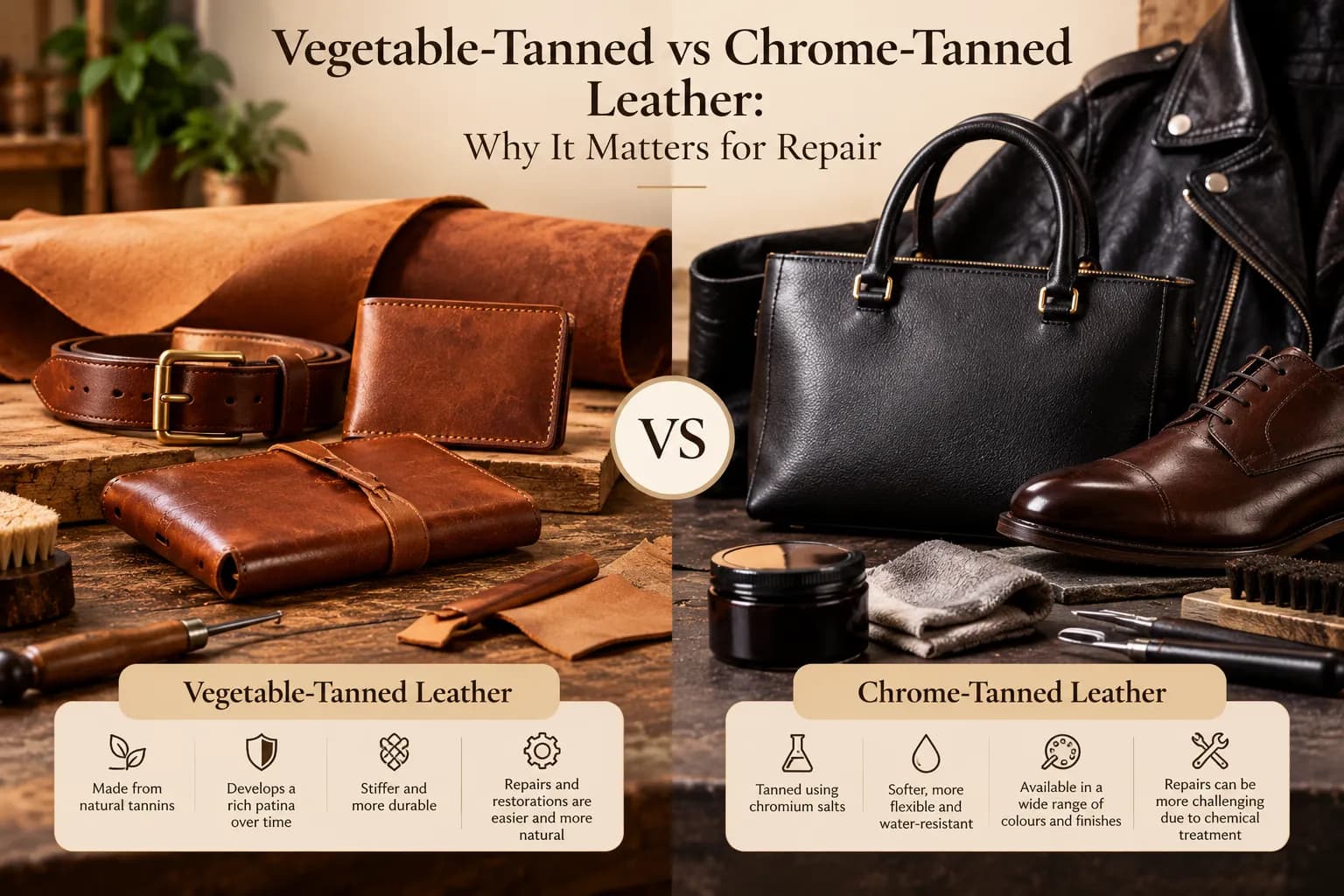
- Veg-tan is firm, develops a patina, and is sensitive to water.
- Chrome-tan is softer, more water-resistant, colour-flexible and consistent.
- Check the cut edge: even beige means veg-tan, pale blue-grey means chrome-tan.
- For durability, grade matters more than the tanning method.
- Both can be repaired; know your type before you hand it over.
What Is Vegetable-Tanned Leather?
Vegetable tanning uses tannins from bark, leaves and other plant matter. Tannins are phenolic substances that bind to the hide's collagen proteins, making the leather more resistant to bacterial attack and extending its life.
Time matters here. Traditional slow tanning keeps hides in a water-and-tannin solution for about 30 days, producing dense, less malleable leather. Drum tanning finishes in roughly 36 to 48 hours and gives a softer, more flexible result. So veg-tan leather isn't one fixed thing; the process changes how it feels.
The plants used also set the shade, usually brownish or reddish. Because tannins are natural, the colour can shift over time. It's also the pricier option and makes up a small minority of world production.
What Is Chrome-Tanned Leather?
Chrome tanning uses chromium salts, mainly chromium sulphate, in rotating drums. It takes about a day, and it's how most of the world's leather is made.
The result is soft, supple leather with better water and heat resistance from the start. It also takes almost any colour and stays consistent from hide to hide. The chromium used is trivalent, not the far more toxic hexavalent form. The real risk is poor process control or untreated effluent, which is why wastewater treatment matters more than the tanning agent itself.
Vegetable-Tanned vs Chrome-Tanned Leather: Key Differences
Appearance & Texture
Vegetable-tanned leather is firm, holds a fold and carries the classic, sweet leather smell in warm tans, browns and russets. Chrome-tanned leather is supple, drapes easily and smells fainter.
Here's my favourite quick test: check a cut edge. Veg-tanned leather is evenly beige or tan all the way through, while chrome-tanned leather usually shows a pale blue-grey core. A bright blue or red hide is almost certainly chrome-tanned.
Durability
Surprise: the tanning method isn't the biggest durability factor. Grade matters more. A chrome-tanned, full-grain hide will always outlast a vegetable-tanned split. When you're judging how long a piece will last, ask about grade first and tanning second. That said, good veg-tanned leather in a full-grain grade is the traditional choice for belts and saddlery for a reason.
Water & Moisture Resistance
Picture a raindrop landing on a tan strap and leaving a dark spot. That's normal: vegetable-tanned leather is sensitive to water, at least initially, and it stains and darkens where it gets wet. Chrome-tanned leather resists water and heat better from day one.
Ageing & Patina
Vegetable-tanned leather darkens with sunlight, hand oils and use, developing a deep patina. Chrome-tanned leather wears well but doesn't build the same character. Neither is "better"; you're choosing between a piece that changes and one that stays put.
How Tanning Method Affects Leather Repair
Both types can be repaired. The difference is what a repairer has to match and manage.
With veg-tan leather, the patina is the challenge. Aged leather darkens unevenly, so a new patch or fresh finish may look different next to it until it catches up. Water marks can also appear on a cleaned area, since the leather darkens when it's wet.
Chrome-tanned leather is more uniform, so colour matching is often more predictable. It's also coloured and finished after tanning, so repairers often work on the surface.
My tip? Check the cut edge before you hand anything over. Telling a repairer which type you’ve got saves guesswork. Not sure? Bring it to DE Leather Craft, and we’ll help you identify it before we start any work.
Which Leather Is Easier to Maintain?
Honestly, chrome-tanned wins for day-to-day ease. Its better water resistance means fewer worries about a sudden shower or a spilled drink.
Vegetable-tanned asks for a little more attention, mainly keeping it out of heavy rain. But it rewards you. Many owners enjoy watching a veg-tanned leather wallet or belt develop its own look. Ready to commit to that? If you'd rather not fuss, chrome-tanned is the calmer choice.
Which Leather Is Better for Different Products?
Think about the object, not just the material.
- Vegetable-tanned: belts, structured bags and wallets you plan to carry for decades. It's the standard for belts, saddlery and structured goods.
- Chrome-tanned: garments, upholstery and most bags. Pick it for softness right away, a specific colour or an item that should look identical to its photo.
Choose veg tan leather when you want structure and a piece that ages with you. Choose chrome tan when you want softness, colour and moisture resistance from the start.
Choosing the Right Leather for Long-Term Use
Ask yourself four questions:
- Do I want it to visibly age or stay as it is?
- Will it get wet often?
- Do I need a specific colour?
- What grade is it?
If patina and structure appeal to you and you keep the piece dry, veg-tanned leather is a rewarding long-term choice. If softness, colour, and moisture resistance matter more, chrome-tanned leather is a better fit. In either case, full-grain is the grade to choose.
Conclusion
Tanning method shapes how leather looks, ages, and responds to water, which affects care and repair. Veg-tan leather offers firmness and patina; chrome-tanned leather offers softness, a wider colour range, and easier upkeep. Match the leather to the product and how you’ll use it, and it’ll serve you well. If you need guidance or a repair along the way, DE Leather Craft is here to help.