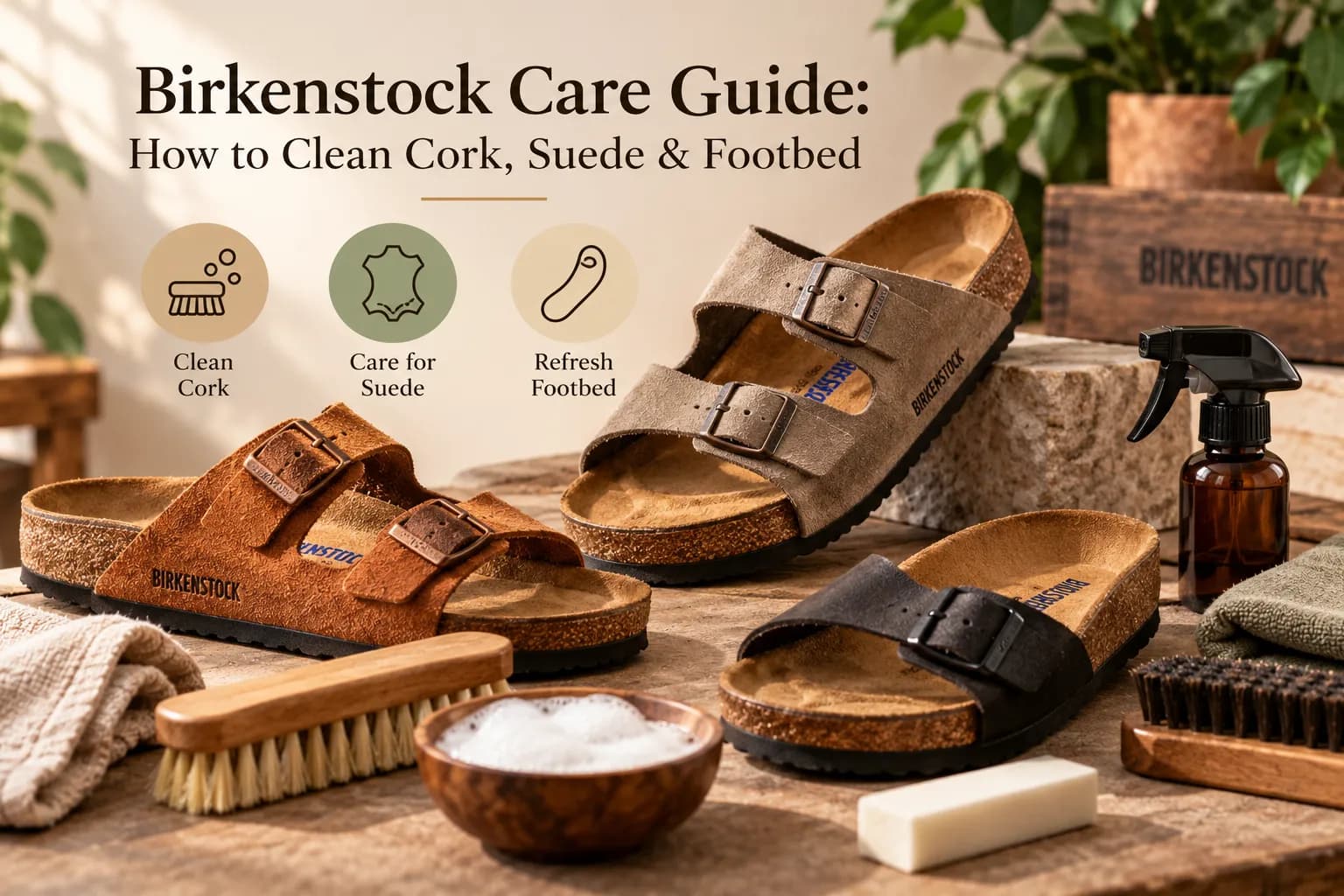
Key Takeaways
- Test cleaners on a hidden patch first.
- Brush suede, wipe leather lightly.
- Seal cork in a thin layer.
- Dry for about 24 hours, away from heat.
Understanding the Different Birkenstock Materials
Many styles pair a cork footbed with a leather, suede or nubuck upper, and each part reacts differently to water. Smooth leather tolerates a slightly damp cloth. Suede and nubuck prefer dry brushing. Cork needs sealing, not soaking.
Knowing the material first helps you clean Birkenstocks without guesswork. Gather a soft brush, an old toothbrush, a lint-free cloth, leather shampoo and two bowls of lukewarm water.
How to Clean the Birkenstock Footbed
The footbed usually needs the most love, because that's where the foot imprint lives. Every time you clean Birkenstocks, spend the most time on this part.
Mix a little leather shampoo into lukewarm water, then work it in with the old toothbrush using gentle circular motions. I'll admit it's oddly satisfying. Wipe the lather away with a wet cloth, and don't run water over the sandals. In my view, this process makes an old pair feel new again. Good Birkenstock footbed cleaning is all about gentle motion and very little water.
Prefer a dedicated cleaner? Cover the footbed, wipe it off with a clean cloth, then brush to restore the nap. For stubborn footprints, use lukewarm water, soap and a cloth.
How to Clean & Protect the Cork Sole
Cork dulls with time. Brush the sole clean, wipe it with a damp cloth, then apply cork sealer in a thin layer with a small applicator brush, like a little paintbrush. Keep it off the leather.
The sealer matters because it helps prevent dry rot that cracks the cork. If you always clean Birkenstocks and then skip this step, you're missing half the job. Consistent Birkenstock cork care keeps the cork looking fresh.
Cleaning Suede & Nubuck Uppers
Suede doesn't like enthusiasm. Use a suede or nubuck brush with light strokes to loosen coarse dirt and dust, then wipe with a dry cloth. There's no need to scrub.
Finish with a water and stain repellent, and repeat these steps regularly. That simple loop is the heart of suede Birkenstock care, and it's easy to fold into your routine without much effort.
How to Clean Leather Birkenstocks
Wipe natural or smooth leather straps with a lint-free cloth that's only slightly damp. Emphasis on slightly, because you don't want to soak the leather.
Use a damp brush to reach inside the buckles and under the straps. Then wipe with leather cleaner or conditioner on a dry cloth and finish with repellent. If you clean Birkenstocks this way every so often, the straps stay looking cared for rather than neglected.
Common Birkenstock Cleaning Mistakes
Most problems come from rushing. Watch out for these:
- Soaking the pair or holding it under running water. Too much water can damage the footbed and ruin the shape.
- Drying near radiators, on window sills or in direct sunlight.
- Applying cork sealer too thickly or directly to leather.
- Skipping the hidden-patch test.
- Scrubbing suede hard instead of using light strokes.
Most of these mistakes happen when people clean Birkenstocks too quickly. Slow down, and you'll avoid all of them.
How to Dry Birkenstocks Correctly
Patience pays off here. Radiators and window sills are tempting shortcuts, but you'll be better off avoiding both. Leave your pair somewhere at room temperature, out of direct sunlight and away from heat. They should be fully dry after about 24 hours, and it helps to keep them away from windows and doors during that time.
Once you clean Birkenstocks and they've dried completely, brush the footbed if needed and close the straps. Want extra freshness? A suitable protective spray helps.
How Often Should You Clean Birkenstocks?
There's no magic number. Care guides recommend regular upkeep rather than a fixed schedule: brush suede and wipe leather regularly, and save a deeper footbed clean for when the foot imprint becomes stubborn.
Little and often is gentler on the materials than one big scrub. In my experience, a quick brush after a dusty day saves a lot of scrubbing later. Not sure whether your pair needs attention? If the footbed imprint looks heavy or the cork looks dull, it's time.
Storage & Long-Term Care
Think of Birkenstock maintenance as three small habits: brush, protect and seal the cork. The same rules for drying apply to storage: dry fully, no heat, no direct sunlight. Before storing, give the footbed a final brush.
When damage goes beyond home care, like worn soles or tired suede, a specialist can help. In Delhi, De Leather Craft brings 40+ years of craft, offers suede restoration and outer sole replacement, and provides free, insured doorstep pickup.
Conclusion
Learning to clean Birkenstocks properly is mostly about restraint: less water, lighter strokes and more drying time. Do that, and your favourite pair keeps looking and feeling like yours. If it needs more than a home refresh, call De Leather Craft on 9560735941 to book a free doorstep pickup in Delhi.