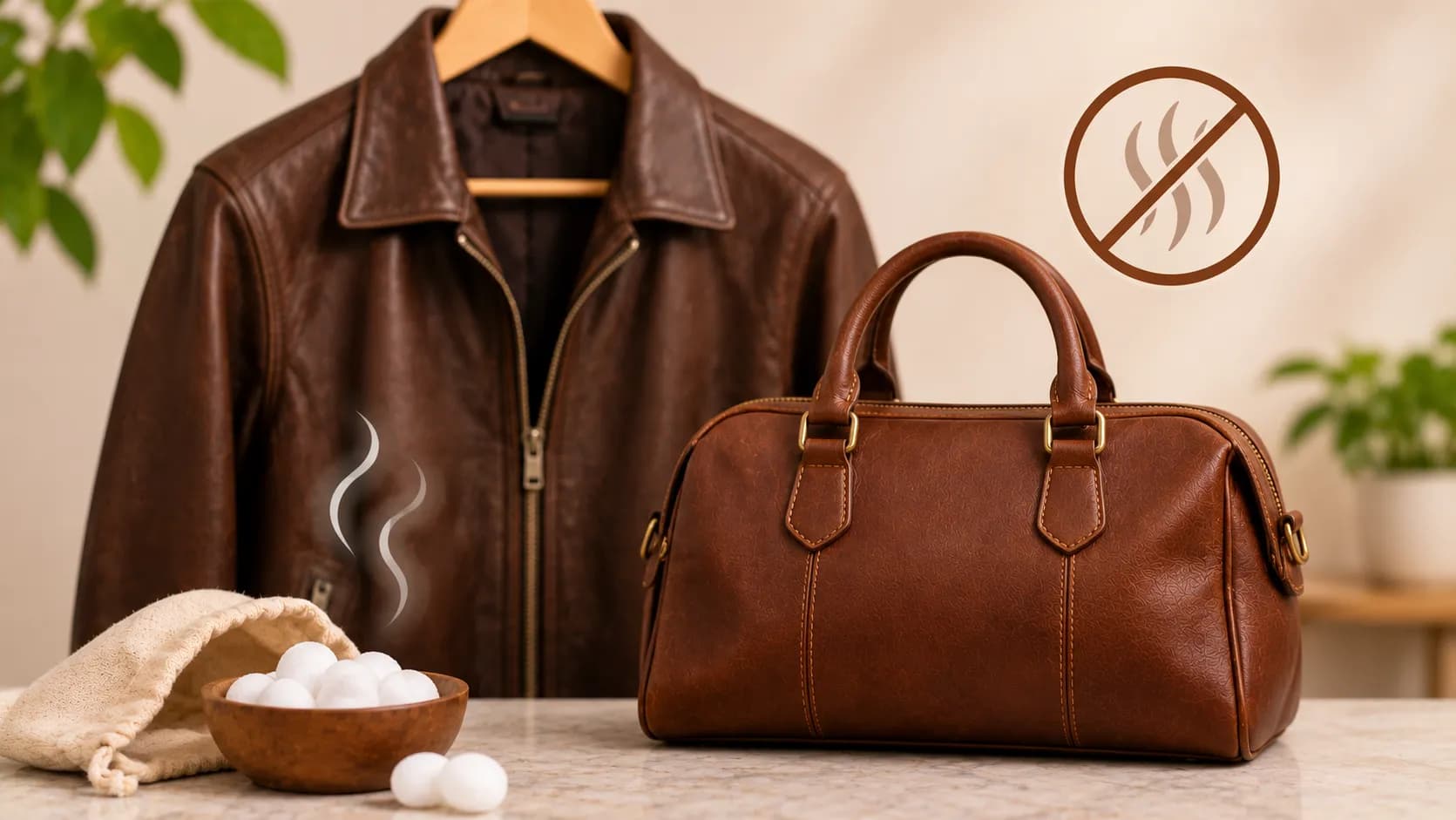
Leather jackets and bags can absorb strong odours when stored in cupboards or wardrobes with naphthalene balls. While these balls help protect stored clothes from moths, their chemical smell can linger on leather long after the accessories are taken out of storage. Since leather is a porous material, it can retain odours and may require careful treatment to eliminate them without affecting its colour, texture or finish.
Knowing how to remove mothball smell from leather is important, especially when dealing with luxury handbags and jackets. Using the wrong cleaning products or masking the smell with perfumes can cause further damage. Here are some ways to manage naphthalene odours while protecting your leather accessories.
Why Do Leather Jackets and Bags Absorb Naphthalene Smell?
Naphthalene balls release vapours that help repel moths and other fabric pests. When leather jackets and bags are stored in enclosed spaces with these balls, they are exposed to concentrated vapours over time.
Leather has a porous structure that can retain airborne odours. The extent of absorption depends on the leather type, surface finish, storage conditions and duration of exposure. Natural leather, suede and other unfinished materials may be particularly sensitive to improper cleaning.
Unlike odours on synthetic surfaces, naphthalene ball smells can be difficult to eliminate from leather because simply wiping the exterior may not address the odour retained in the material or inner lining.
How Naphthalene Affects Leather Accessories
Naphthalene exposure primarily creates an unpleasant, persistent smell. However, attempting to remove it with harsh chemicals can affect the leather's natural oils, colour and finish.
Repeated exposure to unsuitable cleaning agents may cause:
- Dryness: Harsh cleaning products can strip natural oils, making leather feel stiff.
- Colour damage: Strong chemicals may affect dyes and surface pigments.
- Texture changes: Improper treatment can alter the original feel of delicate leather.
- Lingering odours: Perfumes and air fresheners may mask rather than eliminate the smell.
Therefore, effective naphthalene smell removal should focus on gentle odour reduction without compromising the material.
How to Remove Mothball Smell from Leather Jackets
For mild odours, a few precautions can help reduce the smell without exposing the jacket to unnecessary moisture or chemicals.
- Air the jacket: Hang it on a padded hanger in a well-ventilated, shaded area. Avoid direct sunlight, which can fade colours and dry out leather.
- Allow ventilation: Keep the jacket away from cupboards and enclosed spaces for a few days. Ensure adequate airflow around the garment.
- Check the lining: The inner fabric may retain more odour than the leather exterior. Avoid soaking or spraying it with household cleaners.
- Use a leather-safe cleaner: If the jacket also has surface residue, use a cleaner specifically formulated for its leather type, following the manufacturer's instructions.
These steps can support basic leather jacket smell removal. However, persistent odours may require professional treatment to avoid damaging delicate finishes.
How to Remove Naphthalene Smell from Leather Bags
Leather bags need additional attention because their interiors contain compartments, linings and pockets where odours can accumulate.
Follow these precautions for basic leather bag odour removal:
- Empty the bag completely, including its smaller pockets and compartments.
- Remove detachable inserts and accessories, if the manufacturer permits.
- Leave the bag open in a shaded, ventilated space.
- Keep silica gel packets nearby to help manage excess moisture. Do not place loose powders directly against the leather.
- Wipe accessible surfaces only with a suitable leather-safe cleaning product.
Avoid stuffing the bag tightly or placing it near heat sources to speed up the process. If the smell persists inside the lining or leather, professional cleaning is a safer option.
What to Avoid When Removing Odours from Leather
Not every household odour-removal method is suitable for leather. Avoid these common mistakes:
- Direct baking soda application: Loose powder can settle into pores, seams and creases, making removal difficult.
- Vinegar solutions: Their acidity may affect certain leather finishes and dyes.
- Perfumes and deodorants: Alcohol and fragrance compounds can cause staining or finish damage.
- Excessive water: Moisture can lead to staining, stiffness and changes in texture.
- Direct sunlight: Prolonged exposure can cause fading, dryness and cracking.
When dealing with luxury leather accessories, avoid experimenting with untested DIY treatments.
How to Prevent Mothball Smell During Leather Storage
Good leather storage tips can prevent unpleasant odours and reduce the need for repeated cleaning.
- Store leather jackets and bags in breathable fabric dust bags.
- Keep leather accessories in cool, dry and well-ventilated cupboards.
- Avoid placing naphthalene balls directly inside bags or near leather garments.
- Use cedarwood alternatives or other storage solutions designed for pest prevention, ensuring they do not directly contact the leather.
- Clean and completely dry accessories before storing them.
- Avoid overcrowding cupboards, as restricted airflow can encourage musty smells.
Following these leather jacket care practices helps preserve the appearance, texture and longevity of leather accessories.
When to Choose Professional Leather Cleaning
If the mothball smell remains after several days of ventilation, household methods may not be sufficient. This is particularly true for expensive handbags, designer jackets, suede and delicate finished leather.
De Leather Craft offers professional leather cleaning and restoration services for premium leather accessories. Its specialists assess the leather type, surface condition and extent of odour retention before selecting suitable treatment methods.
With material-specific cleaning techniques, specialised products and experienced craftsmanship, De Leather Craft helps care for leather jackets and bags while protecting their original finish. Professional assessment is especially useful when odours are accompanied by stains, dryness or changes in texture.
Conclusion
Removing mothball odours from leather requires patience and the right cleaning approach. Ventilation and careful storage can help manage mild smells, but persistent odours may need professional attention. Avoid harsh chemicals, perfumes and untested household remedies that can damage delicate leather surfaces. For luxury jackets and bags, De Leather Craft provides specialised leather cleaning and restoration to help preserve their appearance and extend their usable life.