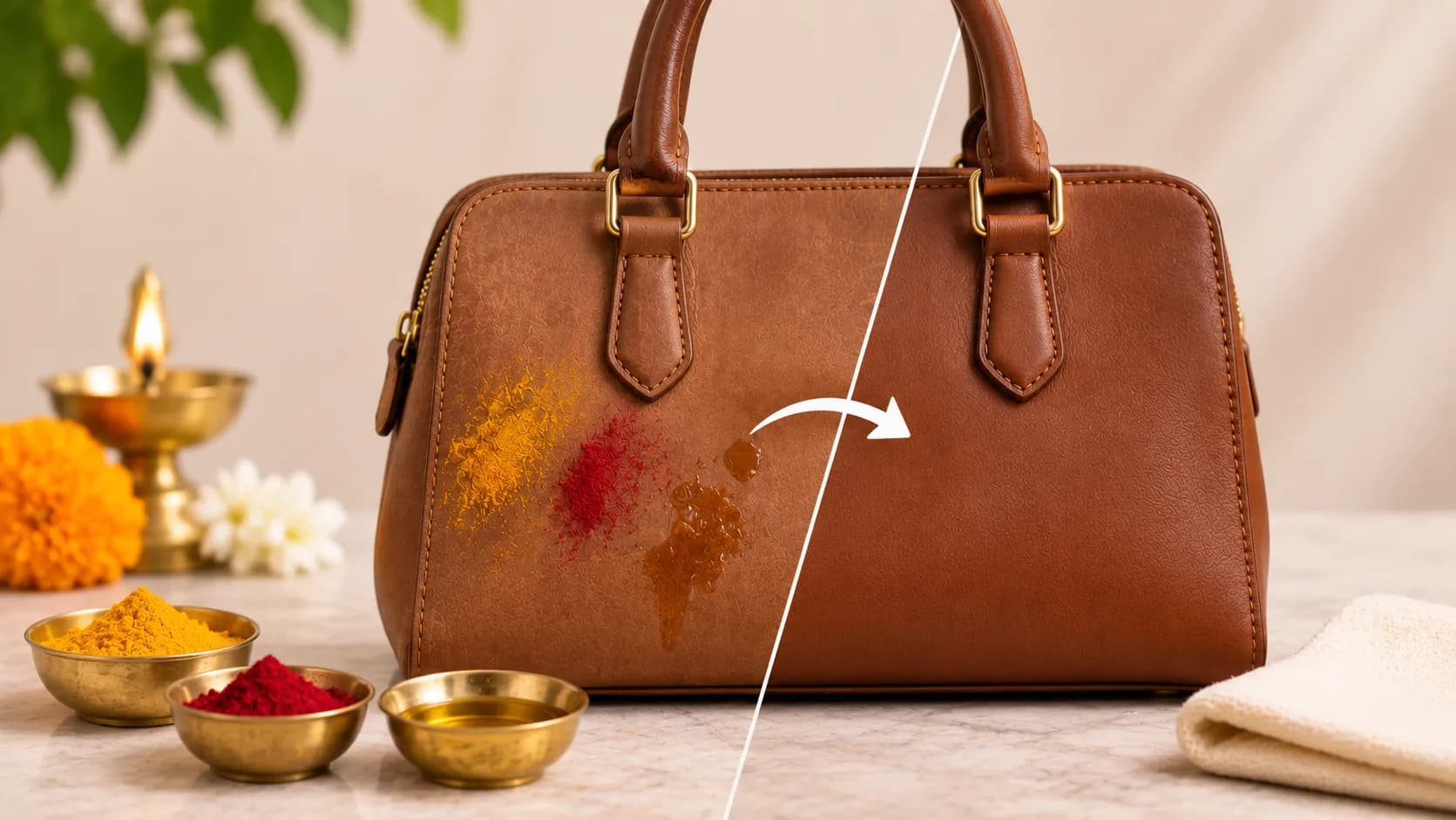
Festive celebrations often involve haldi ceremonies, kumkum rituals, traditional sweets and oil-based preparations. While these occasions create beautiful memories, they can also leave stubborn stains on leather handbags, shoes, wallets and other accessories. A small splash of turmeric or a greasy fingerprint can affect the appearance of an otherwise well-maintained luxury item.
Removing these stains requires care because leather is a natural material with different finishes, textures and absorption properties. Using the wrong cleaning method can cause discolouration, damage or permanent marks. Understanding the type of stain and choosing the right leather stain removal approach can help preserve your favourite accessories.
Why Festive Stains Are Difficult to Remove from Leather
Festive stains are challenging because they contain different types of colouring agents, oils and organic compounds. Turmeric contains curcumin, a strong yellow pigment that can cling to leather surfaces. Kumkum may contain pigments and binding ingredients that leave visible red marks.
Similarly, ghee and cooking oils can penetrate porous leather, leaving dark, greasy patches. Unlike stains on washable fabrics, leather cannot simply be soaked or treated with regular detergents. Excessive moisture and harsh cleaning agents can affect its colour, finish and texture.
How to Identify Haldi, Kumkum, Ghee and Oil Stains
Identifying the stain helps determine the appropriate cleaning approach.
- Haldi stains: Usually appear as bright yellow or yellow-orange patches, particularly noticeable on lighter leather.
- Kumkum stains: Leave red or deep orange marks that may contain concentrated pigments.
- Ghee stains: Create greasy patches that can make the leather appear darker or uneven.
- Oil stains: Often appear as translucent, darkened areas with a slightly greasy texture.
The stain's age, the leather's finish and the extent of absorption also influence the restoration process.
How to Remove Haldi Stains from Leather
A haldi stain on leather should be addressed carefully. Avoid rubbing the affected area, as this can spread the pigment and push it deeper into the material.
For a fresh stain, gently lift any excess turmeric powder using a soft, dry, lint-free cloth. Do not apply water immediately or scrub the surface. On finished leather, a suitable leather-specific cleaner may help with superficial residue, but it should first be tested on an inconspicuous area.
For stubborn marks, professional turmeric stain removal is a safer option. At De Leather Craft, leather specialists assess the material, finish and extent of staining before selecting an appropriate cleaning or colour-restoration treatment. This helps minimise the risk of damaging delicate leather surfaces.
How to Handle Kumkum and Oil Stains on Leather
A kumkum stain on leather can be particularly difficult to remove because concentrated pigments may settle into the grain or surface coating. Avoid wiping it repeatedly or using alcohol-based products, which can affect the leather's colour and finish.
For a fresh spill, carefully lift loose powder without spreading it. If the pigment has settled into the surface, professional cleaning may be necessary.
Similarly, ghee stains on leather and oil stains on leather bags require a different approach from pigment-based stains. Blot excess grease gently with a clean, dry cloth. Avoid pressing hard, applying heat or using household powders without professional guidance, as these may leave additional residue or alter the finish.
De Leather Craft offers specialised leather cleaning and restoration services to address different types of stains while preserving the material's appearance and texture.
Common Leather Stain Removal Mistakes to Avoid
Avoid these common mistakes when dealing with festive stains:
- Using harsh detergents: Household cleaners can strip protective coatings and affect leather colour.
- Scrubbing aggressively: Friction can damage the grain and spread the stain.
- Applying excessive water: Moisture can leave watermarks or affect the leather's structure.
- Using direct heat: Hair dryers and sunlight can dry out leather and cause cracking.
- Experimenting with solvents: Vinegar, alcohol, and other DIY solutions may cause irreversible discolouration.
When to Choose Professional Leather Cleaning
If the stain does not disappear with gentle surface care, professional treatment is recommended. This is especially important for luxury handbags, suede accessories, delicate finishes and deeply absorbed stains.
De Leather Craft provides specialised leather cleaning, stain treatment, recolouring and restoration services for premium leather products. Its specialists assess the leather type and condition before choosing suitable treatment methods. With expertise across more than 100 international luxury brands, the studio focuses on restoring appearance while preserving the material's character.
Professional assessment is particularly useful when turmeric, kumkum or oil has penetrated the leather or affected its original colour.
How to Protect Leather Accessories During Festive Celebrations
A few precautions can help prevent festive stains:
- Keep leather handbags and wallets away from haldi and kumkum preparation areas.
- Store accessories in dust bags when not in use.
- Avoid placing leather products near food counters or serving areas.
- Wipe accidental spills gently without rubbing.
- Keep leather accessories away from oil lamps, ghee containers and other potential spill sources.
- Arrange professional cleaning periodically to maintain their appearance.
These simple festive leather care practices can help protect valuable accessories throughout the celebration season.
Conclusion
Festive stains do not have to mean the end of your favourite leather accessories. However, turmeric, kumkum, ghee and oil require different cleaning approaches, and incorrect DIY treatments can make the damage worse. For stubborn stains and delicate luxury pieces, De Leather Craft offers professional leather cleaning and restoration solutions tailored to the material. Give your cherished accessories the expert attention they deserve and preserve their beauty for celebrations to come.